Elegy for Rojava

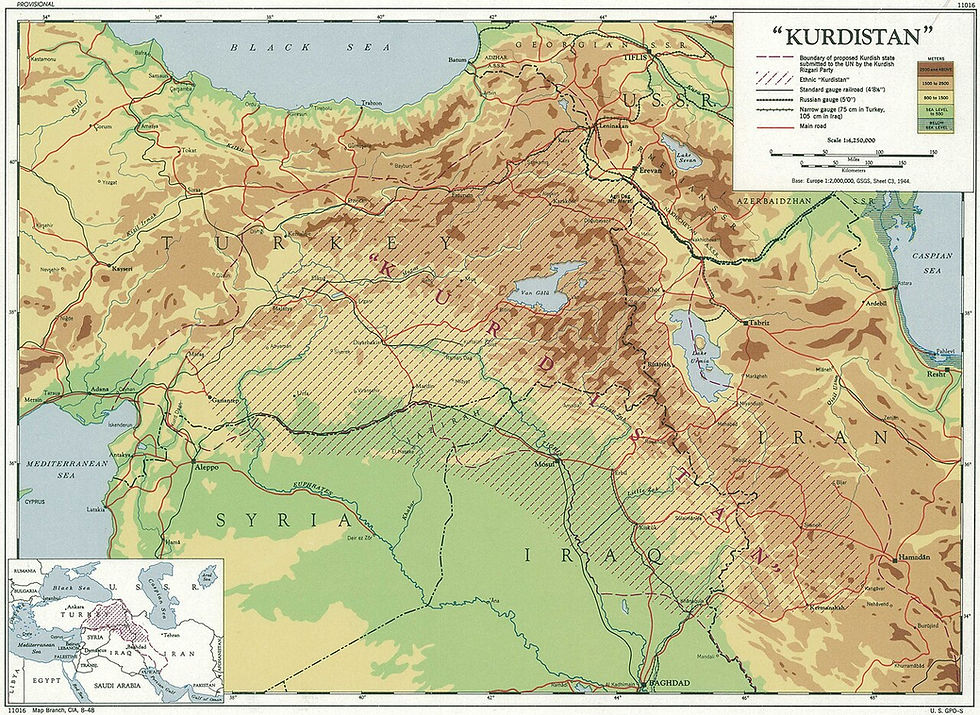
August 2026 marked the end of the 14-year existence of an autonomous region that had garnered significant international attention for its social experiment and its vital contribution to the Global War on Terrorism: the Democratic Autonomous Administration of North and East Syria.
What made the Democratic Autonomous Administration of North and East Syria, better known as Rojava, so unique? Women's full emancipation; direct-democratic structures based on a council system that actively involved every single citizen in the legislative process; the abolition of the death penalty; the protection of religious and ethnic minorities; and the promotion of cooperative, self-managed enterprises. It was, besides some local experiments like e.g. 2015 - 2023 in Barcelona, the only territory on earth that implemented American political philosopher Murray Bookchin's (1921 - 2006) concept of Libertarian Municipalism, respectively Libertarian Communalism.
This attempt to create a freer, more just, and egalitarian society in a region shaped by patriarchal-authoritarian, Islamist structures has now come to an end.
In the future, women will once again face a state that, based on religious and traditional convictions, holds the view that women should be subordinate to men and possess fewer rights than men.
It is no longer possible for all citizens to participate in the legislative process. The majority can consider themselves lucky if, in the future, they get to vote once every few years. The death penalty has been reintroduced. Religious and ethnic minorities must once again subordinate themselves to Sunni Islamism and Arab nationalism. Cooperative enterprises will once again be largely displaced by traditional capitalist firms; employees will have fewer rights than before, and the boss will once again be the quasi-absolute "master of the house".
Nevertheless, there is hope. Ultimately, the reintegration of the Democratic Autonomous Administration of North and East Syria under the authority of the Syrian central government did not come about through complete military destruction and subjugation. Rojava's security forces will be integrated into the Syrian forces. Rojava’s civil servants become Syrian civil servants. Some Members of Rojava’s Government were appointed to the Syrian Government. The Syrian Government could have crushed Rojava. They could have simply fully conquered and annexed it. But they did not and that is positive.
Until the incorporation of Rojava under Syrian central authority, the Syrian Government, since seizing power in December 2024, consisted exclusively of Salafist Islamists and a few technocrats.
Now, there are finally other perspectives within the Syrian government as well. This is a remarkably positive development. Former enemies are now working together, in the government, in the state administration, and in the army. This is a great opportunity for Syria to finally find stability and peace after so many years of war. And not just for Syria; Türkiye, too, can benefit from this. It is, of course, no secret that there was a connection between the Democratic Autonomous Administration of North and East Syria and the Kurdistan Workers' Party.
The fact that supporters of the Kurdistan Workers' Party and Islamists backed by Türkiye are now cooperating peacefully in Syria is an incredibly positive signal for peace. This will also provide enormous support for the peace process in Türkiye, which has already made significant progress since May 2025. It is to be hoped that at least some of the achievements of the revolution in Rojava can be preserved. Syria is a country governed by a centralized system. This is, of course, not surprising, after all, the country was under French rule from the end of the First World War until 1946. Decentralization and federalization would do Syria a great deal of good. Precisely because Syria is a country with great religious and ethnic diversity. It could also help resolve the ongoing conflict with the Druze minority. Peace and reconciliation with the Druze, in turn, would also have a positive impact on the peace process with Israel, which traditionally views itself as a protecting power for the Druze.
The world must not forget Syria. Syria's fate is not only important for the people of Syria; it also affects the fate of the region and even the world.